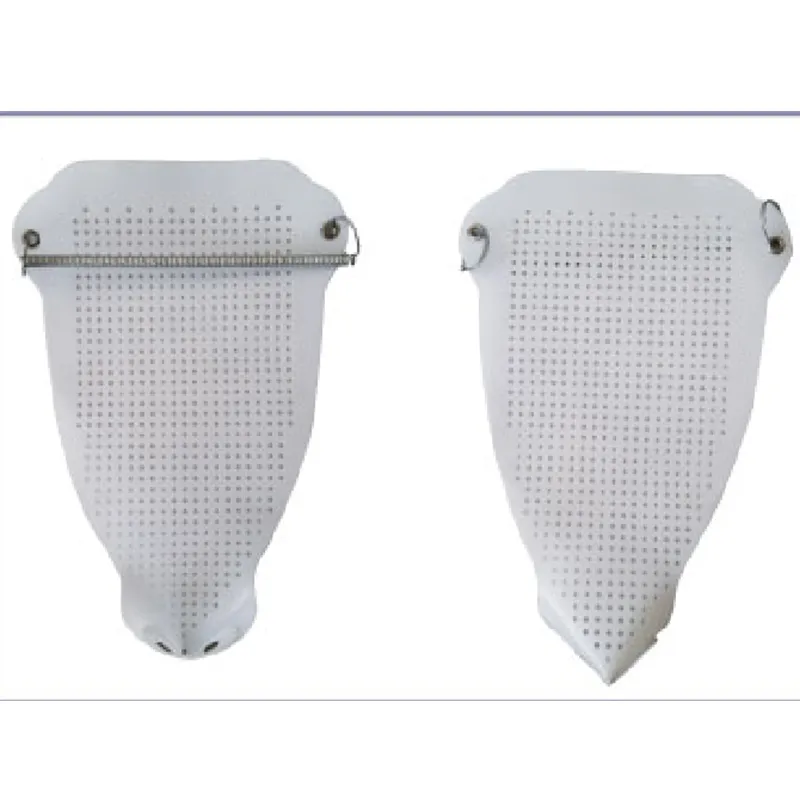
Why iron shoes quietly changed pressing rooms everywhere If you spend your days near a steam iron, you already know the small upgrades are the ones that stick. To be honest, the first time I clipped on a set of iron shoes at a suit factory in Suzhou, I wasn’t expecting much. And then—no shine on dark wool, fewer complaints from QC, and the operators? They didn’t want to take them off. That’s become a repeated story in apparel, uniform laundries, and even small bridal ateliers. Actually, the trend line is clear: PTFE-coated accessories are moving from “nice-to-have” to standard kit. What they are and why they work HBMEC’s iron shoes use Teflon (PTFE) for high temperature resistance and ultra-low friction. Translation: the sole glides; fabric doesn’t glaze. Steam disperses through perforations, hot spots calm down, and the PTFE surface keeps adhesives and sizing from gumming up. It sounds simple. It is. But the cumulative gains—lower rework, fewer press marks, safer handling—add up. Current industry pulse Shift to PTFE accessories to reduce fabric shine on synthetics and dark wools. Energy-conscious workflows: lower soleplate temp, rely on steam + PTFE glide. More SKUs sized for Juki, Veit, Silver Star, Philips household lines—custom fits are in. Product specs (typical) Parameter Spec (≈) Notes Material PTFE (Teflon) shell + stainless spring clips Low friction, non-stick Thickness 0.6–1.0 mm Model-dependent Max use temp ≈260°C (500°F) Continuous service Coefficient of friction 0.04–0.10 ASTM D1894, internal lab Perforation Multi-hole steam dispersion Optimized spacing Fitment Clip-on / spring-retained Tool-free install Process flow and testing Materials: PTFE sheet die-cut, laser-perforated; stainless clips formed, riveted; edges deburred. Methods: Dimensional jig check → surface energy check → clip tension test → final fit test on sample irons. Testing standards: COF per ASTM D1894; clip corrosion per ISO 9227 (salt spray); thermal stability cross-check via DSC (ASTM D3418); flammability reference UL 94 (PTFE is typically V-0). Real-world use may vary, of course. Service life: around 800–1,500 ironing hours, depending on heat setting, fabric resin buildup, and operator handling. Many customers say they simply wipe with a soft cloth mid-shift and keep going. Where they shine (pun intended) Apparel factories: dark wool suiting, polyester uniforms, denim top-pressing. Commercial laundries: hospital and hospitality linens—less scorching, smoother glide. Alteration shops/ateliers: delicate silks, satin bridal gowns, interlinings that love to stick. Vendor snapshot Vendor PTFE grade Clip material Lead time Certs Warranty HBMEC iron shoes (Shijiazhuang) Virgin PTFE Stainless 304 7–15 days ISO 9001, RoHS, REACH 12 months Vendor A Mixed PTFE Stainless/Mild steel 14–21 days RoHS 6 months Vendor B Reprocessed PTFE Mild steel 21–30 days None listed 3 months Customization Custom cutouts for different soleplate geometries (household and industrial), variable perforation density for steam-heavy lines, and private-label packaging. Origin: No.71, Hezuo Road, Shijiazhuang, P.R. China—handy if you’re consolidating shipments in North China. Mini case notes Uniform plant (3 lines, 9 presses): After switching to iron shoes , rework for shine dropped 38% over 6 weeks; operators lowered sole temp by ~15°C. Bridal studio: Satin scorching incidents fell to zero in month one; cleaning adhesive residue went from daily to weekly. Feedback is usually pragmatic: “Less sticking,” “steam spreads better,” “clips feel sturdy.” It seems that the small quality-of-life improvements keep teams loyal. Compliance and notes PTFE is inert and heat-stable; metal clips validated via ISO 9227 salt spray. Internal COF tests match published PTFE ranges. Appliances should still comply with IEC 60335-2-3 (safety of electric irons)—the accessory doesn’t replace appliance safety. ASTM D1894: Standard Test Method for Static and Kinetic Coefficients of Friction IEC 60335-2-3: Particular requirements for electric irons ISO 9227: Corrosion tests in artificial atmospheres — Salt spray tests UL 94: Flammability of plastic materials

-
 Textile
 -
 Fabric
 -
 Sustainability
 -
 Innovation
 -
 Manufacturing